STEM AP Courses Roadmap: How Immigrant Families Build a Top College Application
Complete guide to STEM AP courses (Calculus BC, Physics, Chemistry, Biology, Computer Science) for immigrant high schoolers — what to take, when, and how to accelerate using state credit-by-exam programs.
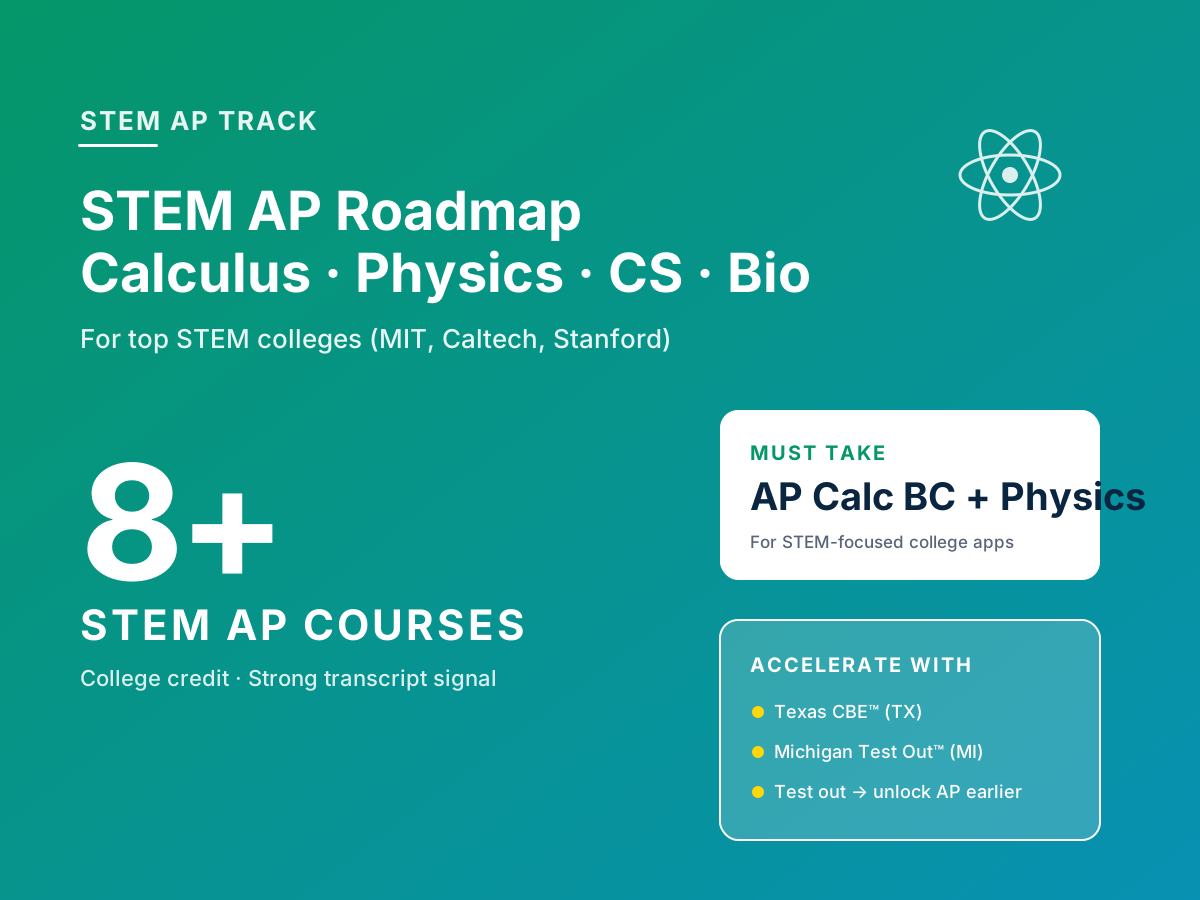
For immigrant families with college-bound STEM students, AP courses are the single most important academic signal on a high school transcript. Top STEM colleges — MIT, Caltech, Stanford, Princeton, Berkeley — explicitly look for students who challenged themselves with the most rigorous math and science courses available.
But you can't just take "all the APs." Strategy matters. Sequence matters. Foundation matters even more. This guide walks you through the STEM AP roadmap from 9th to 12th grade, with acceleration strategies that immigrant families can actually use.
Accelerate Your Child's Math with Texas CBE™ →Why STEM AP Courses Matter
US college admissions for STEM majors evaluate candidates on three core dimensions:
- Course rigor — Did you take the hardest classes available?
- Test scores — SAT/ACT, AP exam scores, math competitions
- Demonstrated interest — Research, projects, internships in your field
AP courses dominate the first dimension. A transcript with AP Calculus BC, AP Physics C, and AP Chemistry signals very different ability than one with regular Honors courses, even if grades are identical.
What Top Colleges Look For
| College | Typical STEM AP Expectations |
|---|---|
| MIT | Calc BC, Physics C, Chemistry, plus 1-2 more |
| Caltech | Same + AP CS A, often AP Physics C E&M |
| Stanford | 5-7 STEM APs typical for admitted STEM students |
| Berkeley | Calc BC required for engineering, plus science APs |
| Carnegie Mellon | Calc BC, Physics, CS A for engineering/CS |
For elite schools, 5-8 APs is competitive, not exceptional. Setting up the prerequisite courses to make those APs possible starts in middle school.
The Core STEM AP Courses
AP Calculus AB vs BC
AP Calculus AB covers single-variable differential and integral calculus. AP Calculus BC covers everything in AB plus series, sequences, and polar/parametric topics — equivalent to college Calc 1+2.
| Feature | AP Calculus AB | AP Calculus BC |
|---|---|---|
| Prerequisites | Pre-Calculus | Pre-Calculus (strong) |
| Difficulty | Moderate | Hard |
| College credit | Calc 1 (4 units) | Calc 1+2 (8 units) |
| For STEM majors | Insufficient | Required |
| For non-STEM | Sufficient | Overkill |
Verdict for STEM-bound students: Take BC, not AB. AB is fine for biology, pre-med, or general college prep. BC is the standard for engineering, physics, math, and CS majors.
AP Physics 1, 2, C: Mechanics, C: E&M
| Course | Math Required | Difficulty | Best For |
|---|---|---|---|
| AP Physics 1 | Algebra-based | Moderate | First physics exposure |
| AP Physics 2 | Algebra-based | Moderate | Sequel to Physics 1 |
| AP Physics C: Mechanics | Calculus-based | Hard | STEM majors |
| AP Physics C: E&M | Calculus-based | Hard | Engineering/Physics |
Strategy for STEM-bound students:
- Skip Physics 1/2 if possible (algebra-based, less recognized)
- Take AP Physics C: Mechanics (junior year, after/during Calc BC)
- Add AP Physics C: E&M (senior year, optional but impressive)
AP Chemistry
A foundational course for pre-med, chemical engineering, biochemistry. The first-year college chemistry equivalent.
- Prerequisites: Algebra 2, basic chemistry exposure
- Difficulty: Hard — heavy memorization plus problem-solving
- Best timing: 11th or 12th grade
- For pre-med: Essential
- For pure CS/math: Optional
AP Biology
Covers cell biology, genetics, evolution, ecology — first-year college biology.
- Prerequisites: Honors Biology or strong general biology background
- Difficulty: Hard — heavy reading and memorization
- Best timing: 10th, 11th, or 12th grade
- For pre-med, biology majors: Essential
- For other STEM: Strong elective
AP Computer Science Principles vs A
AP CS Principles: Conceptual introduction to computing. Easier, broader. AP CS A: Java programming. Equivalent to CS 101 in college.
| Feature | CS Principles | CS A |
|---|---|---|
| Programming language | Various | Java |
| Difficulty | Moderate | Harder |
| For CS majors | Insufficient alone | Required |
| Combine with | CS A | Self-study C++/Python |
Strategy: Take CS Principles in 9th-10th grade as introduction, then CS A in 11th-12th grade.
AP Statistics
Increasingly important for data science, business analytics, biostatistics. Not as core as Calculus but valuable.
The 4-Year STEM AP Roadmap
9th Grade — Foundation Year
Math: Geometry (or Algebra 2 if accelerated) Science: Honors Biology Possible AP: AP CS Principles Goal: Build study habits, explore subjects
10th Grade — Build Momentum
Math: Algebra 2 → Pre-Calculus Science: Honors Chemistry Possible APs: AP CS Principles, AP World History, AP Human Geography Goal: Take first APs to demonstrate readiness
11th Grade — The Most Important Year
Math: AP Calculus BC (or AB if not ready) Science: AP Chemistry or AP Biology Possible APs: AP CS A, AP Physics C: Mechanics, AP English Language Goal: Maximum challenge — colleges weight junior year heavily
12th Grade — Sustain and Specialize
Math: Multivariable Calculus (community college) or Linear Algebra Science: AP Physics C: E&M, second science AP Possible APs: AP Statistics, AP Economics, more Goal: Maintain rigor; show specialization
The Acceleration Problem
Here's the issue most immigrant families face: you can't take AP Calculus BC in 11th grade if you're still in Algebra 2.
The math sequence is rigid:
Algebra 1 → Geometry → Algebra 2 → Pre-Calculus → AP Calculus BC
Standard schools place 9th graders in Algebra 1 or Geometry. With only 4 years of high school, you can't reach Calculus BC unless you're at least 1-2 years ahead entering 9th grade.
How Immigrant Students Often Solve This
Many immigrant kids studied advanced math in their home countries — Korean, Japanese, Indian, Chinese, and Russian curricula are typically 1-2 years ahead of US public schools. The challenge is proving that knowledge to the school district.
That's where state credit-by-exam programs become game-changers.
Math Acceleration with Texas CBE™
The best way to accelerate is to test out of math courses your child already knows. Most states have a credit-by-exam pathway (Texas CBE, Michigan Test Out, NY proficiency exams, etc.) — and Texas CBE™ (texascbe.com) provides prep aligned to standardized math content that works for students nationwide.
Strategy 1: Standard Acceleration
- Summer before 9th: Test out of Algebra 1
- Start 9th grade in Geometry
- Test out of Geometry mid-year
- Take Algebra 2 in 10th grade
- Take Pre-Calculus in 11th grade
- Result: AP Calculus BC available in 12th grade
Strategy 2: Maximum Acceleration
- Test out of Algebra 1 and Geometry before 9th grade
- Take Algebra 2 in 9th grade
- Take Pre-Calculus in 10th grade
- Take AP Calculus BC in 11th grade
- Take Multivariable Calculus or Linear Algebra in 12th grade
- Result: College-level math by senior year — exactly what MIT/Caltech want
The key advantage: test-out credits count exactly the same as taking the full course, but free up an entire semester or year for advanced coursework.
Start FREE Math Acceleration Prep on Texas CBE™ →Sample STEM AP Schedules by Profile
Profile A: Pre-Med Track (Bio + Chem Focus)
| Year | Math | Science | Other AP |
|---|---|---|---|
| 9 | Algebra 2 | Honors Biology | AP Human Geography |
| 10 | Pre-Calculus | Honors Chemistry | AP CS Principles |
| 11 | AP Calculus AB | AP Biology | AP English Language |
| 12 | AP Statistics | AP Chemistry | AP Psychology |
Result: 5-6 APs, focused on bio/chem foundation for pre-med.
Profile B: Engineering Track (Calc + Physics)
| Year | Math | Science | Other AP |
|---|---|---|---|
| 9 | Geometry | Honors Biology | — |
| 10 | Algebra 2 / Pre-Calc | Honors Chemistry | AP CS Principles |
| 11 | AP Calculus BC | AP Physics C: Mechanics | AP CS A |
| 12 | Multivariable / Linear Algebra | AP Physics C: E&M | AP Chemistry |
Result: 6-7 APs, ideal for MIT/Caltech engineering applications.
Profile C: Computer Science Track
| Year | Math | Science | Other AP |
|---|---|---|---|
| 9 | Geometry | Honors Biology | AP CS Principles |
| 10 | Algebra 2 / Pre-Calc | Honors Chemistry | AP CS A |
| 11 | AP Calculus BC | AP Physics C: Mechanics | AP Statistics |
| 12 | Linear Algebra / Discrete | AP Physics C: E&M | Self-study Data Structures |
Result: Strong CS preparation, competitive for top CS programs.
Common Mistakes to Avoid
1. Taking Too Many APs Without Foundation
A 5 on AP Calc BC requires solid Algebra 2 and Pre-Calculus. Don't skip foundation work.
2. AP Calc AB Instead of BC for STEM
AB doesn't cover series and parametric/polar — topics required for advanced college math. STEM students take BC.
3. Skipping Physics
Many engineering programs assume incoming students have AP Physics. Don't graduate without at least one physics AP.
4. Choosing AP Bio/Chem When You Don't Need Them
If you're going into pure math or CS, AP Bio and Chem aren't necessary. Use those slots for additional math or CS courses.
5. Ignoring AP Self-Study
Some APs (like AP Statistics or AP CS A) can be self-studied. Take the exam without taking the class to add to your transcript.
6. Not Acceleration Math Early Enough
Without acceleration, AP Calc BC isn't possible. Use test-out programs in middle school and early high school.
How to Prepare for STEM APs
For Each AP Course
- Use the official College Board prep books — best alignment with actual exam
- Take past AP exams under timed conditions — they're released publicly
- Aim for a 5 — colleges weight scores. A 4 is OK; a 3 may not earn credit
- Don't cram — STEM APs require steady weekly study
For the Acceleration Path
- Use state test-out programs — Texas CBE™ or Texas CBE™
- Study during summers — most acceleration happens between school years
- Take community college courses — many high schools allow dual enrollment
- Self-study for AP exams — you can take any AP exam without taking the class
What Test Scores Should You Aim For?
| Score | Meaning | College Credit |
|---|---|---|
| 5 | Extremely well qualified | Yes (most colleges) |
| 4 | Well qualified | Yes (most colleges) |
| 3 | Qualified | Sometimes (varies) |
| 2 | Possibly qualified | Rarely |
| 1 | No recommendation | No |
For top-50 universities: Aim for 5s. A few 4s are fine. Avoid 3s on transcript. For state schools: 4s and 5s open doors. 3s often suffice for credit.
Top schools care more about course rigor than perfect scores, but obviously high scores on hard courses are best.
Cost of AP Exams
Each AP exam costs $98 (2026). Fee waivers available for low-income families ($0-$28).
8 APs over high school = ~$784
This is a real cost for immigrant families. Plan ahead and apply for fee waivers if eligible — most schools handle this through the counselor's office.
Bottom Line
The STEM AP roadmap is rigid but rewarding. Top STEM colleges expect AP Calculus BC, AP Physics C, and 3-5 more STEM APs from competitive applicants. To make this possible, your child needs to be 1-2 years ahead in math by 9th grade.
For immigrant families, this is achievable through state credit-by-exam programs. Texas CBE™ provides math acceleration prep that works for students in any state — Algebra 1, Geometry, and Algebra 2 content is standardized nationwide.
State-mandated test-out programs are often free at the district level and add real credits to your child's transcript. Combined with focused AP preparation, your child can build the kind of transcript that opens doors at MIT, Stanford, and other top STEM colleges.
Action steps for this month:
- Map out your child's current math placement vs. target (AP Calc BC by 11th grade?)
- Identify which courses they could test out of NOW
- Try free practice on Texas CBE™ — works nationwide for Algebra/Geometry
- Talk to school counselor about test-out scheduling
- Plan summer acceleration timeline
Your child's STEM college path can be reshaped this summer.
Get Started with Texas CBE™ — Free Practice →