Texas Nail Tech School Guide: 600 Hours, Tuition Costs, and How to Choose
A complete guide to becoming a licensed nail technician in Texas — required hours, tuition costs, school types, and tips for immigrant students considering this career.
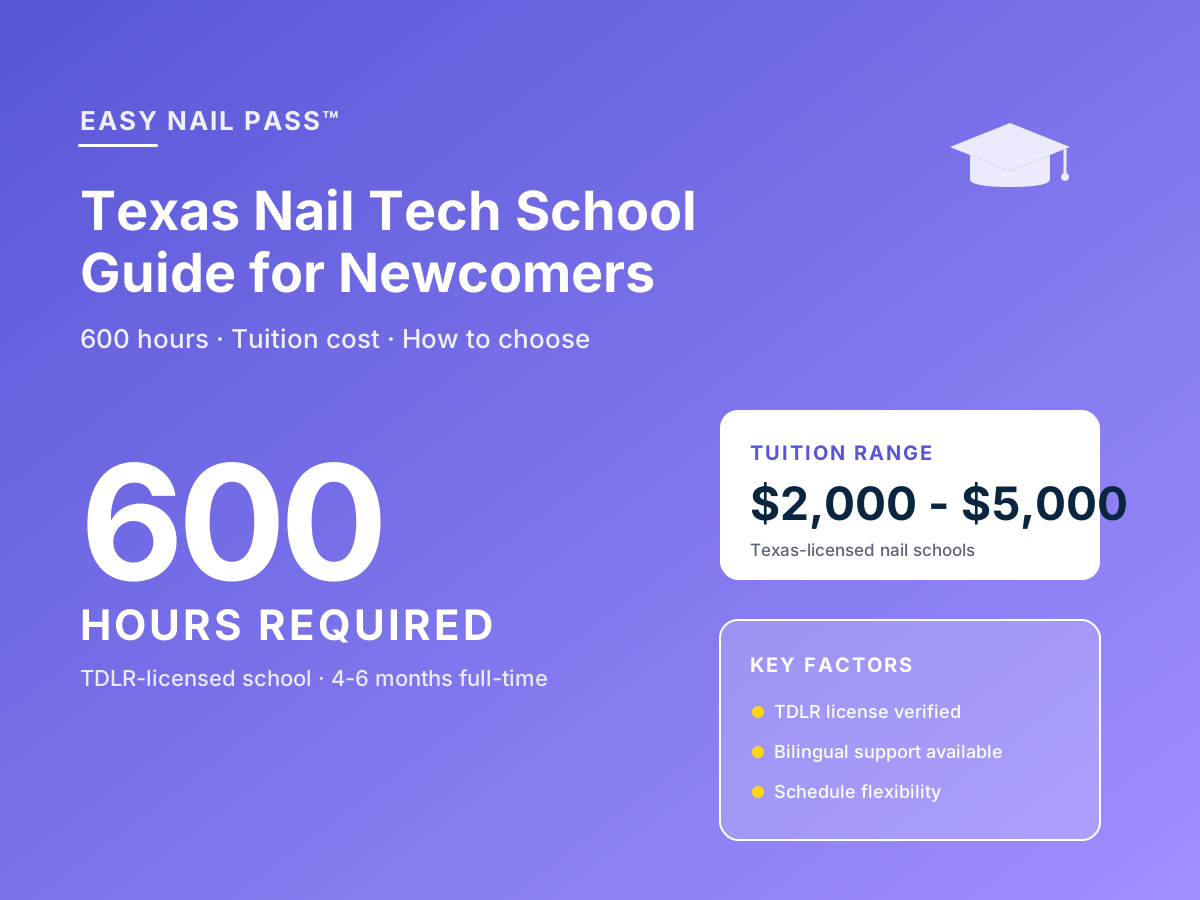
For many immigrants in Texas, becoming a licensed nail technician is one of the fastest paths to financial independence. The barrier to entry is relatively low, the required training is short (just 600 hours), and the demand for skilled nail techs is growing. But choosing the right school matters — both for your wallet and your career.
This guide walks you through everything: hours, costs, schools, financial aid, and what immigrant students specifically should know.
Why a Nail Tech Career Makes Sense for Newcomers
Before diving in, here's why this career path is popular among immigrant communities in Texas:
- Short training — Just 600 hours (4-6 months full-time)
- Lower tuition — $2,000-$5,000 vs $20,000+ for other career programs
- Earning potential — Average $30,000-$60,000/year, often more in major metros
- Flexible schedules — Many salons offer part-time or commission-based work
- Tip income — Cash tips can significantly boost take-home pay
- Self-employment — After licensing, you can rent a booth or open your own salon
- Bilingual advantage — Korean, Vietnamese, and Spanish-speaking communities are well-established
Texas Licensing Requirements
In Texas, all nail technicians must be licensed by the TDLR (Texas Department of Licensing and Regulation). No exceptions.
What You Need to Get Licensed
- Complete 600 hours of instruction at a TDLR-licensed school
- Pass the TDLR licensing exam (written + practical)
- Submit your application with fee
- Receive your nail technician license
Out-of-state credit: Hours from another state's nail tech program may transfer with TDLR approval. If you have a cosmetology license from another state, you may qualify for an endorsement pathway.
The 600-Hour Requirement Explained
This is set by TDLR and applies uniformly across the state. It typically breaks down to:
| Schedule | Time to Complete |
|---|---|
| Full-time (40 hrs/week) | 4 months |
| Part-time (20 hrs/week) | 7-8 months |
| Weekends only | 12-15 months |
| Hybrid (online + practical) | Varies by school |
Important: Texas TDLR generally does NOT allow 100% online completion. Hybrid programs combining theory online with supervised hands-on practice are viable, but you'll need to physically attend the school for the practical portions.
Tuition Cost Breakdown
Nail tech school tuition in Texas falls into three tiers:
Budget Tier ($2,000-$3,000)
- Smaller, nail-specific schools in major metros (Houston, Dallas, Austin, San Antonio)
- Focus exclusively on nail technology
- Often family-run with bilingual support (Korean, Vietnamese, Spanish)
- Less marketing, more affordable
Best for: Students on tight budgets who want to focus solely on nails.
Mid-Range Tier ($3,000-$5,000)
- Cosmetology schools that offer nail-specific tracks
- Better facilities and equipment
- More structured curriculum
- May include broader beauty industry exposure
Best for: Students who want a more comprehensive beauty education.
Premium Tier ($5,000+)
- National chain beauty schools
- Brand recognition (helpful for some employer hiring)
- Modern facilities and additional services
- Often includes career placement support
Best for: Students who value brand reputation and additional career services.
Hidden Costs to Budget For
The tuition isn't the whole picture. Plan for these additional costs:
| Item | Typical Cost |
|---|---|
| Nail tech kit (tools, supplies) | $200-$500 |
| Textbooks | $50-$150 |
| Uniform (some schools) | $50-$100 |
| TDLR exam fee | $40-$80 |
| Application fee | $50 |
| Background check | $25-$50 |
| Initial license fee | $50 |
| Workbook/study materials | $30-$80 |
Total additional costs: $500-$1,000 beyond tuition
Tip: Some schools include the kit in tuition. Always ask what's bundled before signing.
Financial Aid Options
NACCAS-Accredited Schools
National Accrediting Commission of Career Arts and Sciences (NACCAS) accredited schools qualify for federal financial aid:
- Pell Grants (up to $7,395/year — doesn't need to be repaid)
- Federal Direct Loans (subsidized and unsubsidized)
- FAFSA application required
Important: Smaller, nail-only schools may not be NACCAS-accredited and won't qualify for federal aid.
School-Specific Options
Most schools offer:
- Payment plans — Monthly installments instead of upfront payment
- Workforce development grants — State/county funded for low-income students
- Industry scholarships — From beauty brands like OPI, CND, etc.
- Veteran benefits — GI Bill eligible at some schools
ITIN-Friendly Enrollment
Many smaller nail schools in Texas accept students with ITINs (not just SSNs). This is especially common in immigrant-heavy areas like Houston, Dallas, and Austin. If you don't have an SSN yet, ask schools directly about ITIN enrollment options.
How to Choose the Right School
Critical Questions to Ask Before Enrolling
- Are you TDLR-licensed? Verify this on the TDLR website directly
- What is your first-attempt pass rate? A good school should have 80%+
- Is the kit included in tuition? Get a written list of what's included
- What languages do you teach in? Many Texas schools offer bilingual instruction
- Can I tour the classroom? Always visit before paying anything
- What's your refund policy? What happens if you can't complete the program?
- Do you offer job placement assistance? Many schools have salon partnerships
- Do you have flexible scheduling? Part-time, evening, weekend options matter
- Are you NACCAS-accredited? Required for federal financial aid
- What support is available in my native language? Korean/Vietnamese/Spanish bilingual instructors are common
Red Flags
- No TDLR license — Walk away immediately
- Pressure to enroll immediately — Legitimate schools give you time to decide
- No campus tour offered — Suspicious
- Vague pricing — Demand a written, itemized quote
- No first-attempt pass rate — They're hiding poor performance
- Cash only — Sketchy payment policies
Best Test Prep: Easy Nail Pass
Even with the best 600-hour program, the TDLR licensing exam can trip up students if they don't prepare specifically for the test format. Easy Nail Pass is a dedicated prep platform built for the Texas TDLR nail technician exam.
Why it's worth using alongside your school program:
- TDLR-aligned questions — Maps to the actual licensing exam content
- Bilingual support — Designed with immigrant students in mind
- Mobile-friendly — Study during breaks at school or work
- Affordable — Significantly cheaper than retaking the exam if you fail
- Free practice tests — Try before you buy
The biggest mistake students make is waiting until after graduation to start exam prep. Start during your coursework, not after. This way the material stays fresh and you walk into your test confident.
Try Easy Nail Pass — Free Practice Tests Available →Realistic Income Expectations After Licensing
Starting Out (First Year)
- Hourly wage at salon: $10-$15/hour + tips
- Commission-based: 50-60% of service price
- Annual income: $25,000-$40,000 with tips
Experienced (3+ Years)
- Independent booth rental: Keep 100% of service revenue, pay rent ($150-$400/week)
- Average annual income: $40,000-$70,000
- Top earners in major metros: $70,000-$100,000+
Salon Owner
- Income ceiling: Unlimited
- Investment required: $20,000-$100,000 to start
- Risk level: Higher, but much greater long-term reward
Tips for Immigrant Students
1. Choose a School in Your Community
Korean, Vietnamese, and Spanish-speaking communities have established nail schools where instruction is offered in your native language. This dramatically improves learning speed and exam pass rates.
2. Network While in School
Many salons hire directly from schools. Build relationships with classmates and instructors — they often refer students to job openings.
3. Save for Your Own Booth Rental
Once licensed, transitioning from employee to independent booth renter can double your income. Save aggressively in your first 1-2 years.
4. Track Your Tips for Taxes
The IRS requires tip income to be reported. Keep a daily log. This also matters when you apply for credit cards, mortgages, or other loans where you need to prove income.
5. Build US Credit From Day One
You'll need credit for booth rental deposits, salon equipment, and eventually opening your own business. Start with a secured credit card immediately.
6. Open a Business Bank Account
Even as an employee, having a separate account for tips and business income makes tax filing infinitely easier.
A Realistic Timeline
| Phase | Time | Cost | Earnings |
|---|---|---|---|
| Research schools | 2-4 weeks | $0 | $0 |
| Enroll + start | Day 1 | $500-$1,000 deposit | $0 |
| Complete 600 hours | 4-6 months | $2,000-$5,000 total | $0 |
| Pass TDLR exam | 2-4 weeks after | $40-$80 | $0 |
| First salon job | 1-2 weeks after license | $0 | $25,000-$40,000/year |
| Booth rental | After 1-2 years experience | $150-$400/week | $40,000-$70,000/year |
| Own salon | After 3-5 years | $20,000+ investment | $70,000+ potential |
Total time from start to first paycheck: 5-7 months Total upfront investment: $3,000-$6,000
That's an exceptional return on investment compared to most career paths.
Bottom Line
A nail technician license in Texas is one of the most accessible career paths for immigrant families. With just 600 hours of training and a budget of $3,000-$6,000 (including all extras), you can be working in a high-demand field within 6 months. The work is steady, tips are good, and there's a clear path to independent business ownership.
Action steps for this week:
- List 5-10 TDLR-licensed schools in your area
- Tour at least 3 schools — visit in person, ask the critical questions
- Get itemized quotes in writing
- Apply for FAFSA if you want federal aid (NACCAS schools only)
- Start exam prep early — don't wait until graduation
The path is straightforward. The hardest part is starting.
Pass Your TDLR Exam — Try Easy Nail Pass Free →