Texas Homeschool Boom: 3x Growth Since 2020 — What Immigrant Families Need to Know
Texas homeschooling has tripled since 2020, with over 620,000 students and $7 billion in state savings. Here's why immigrant families are joining the trend and how CBE makes it work.
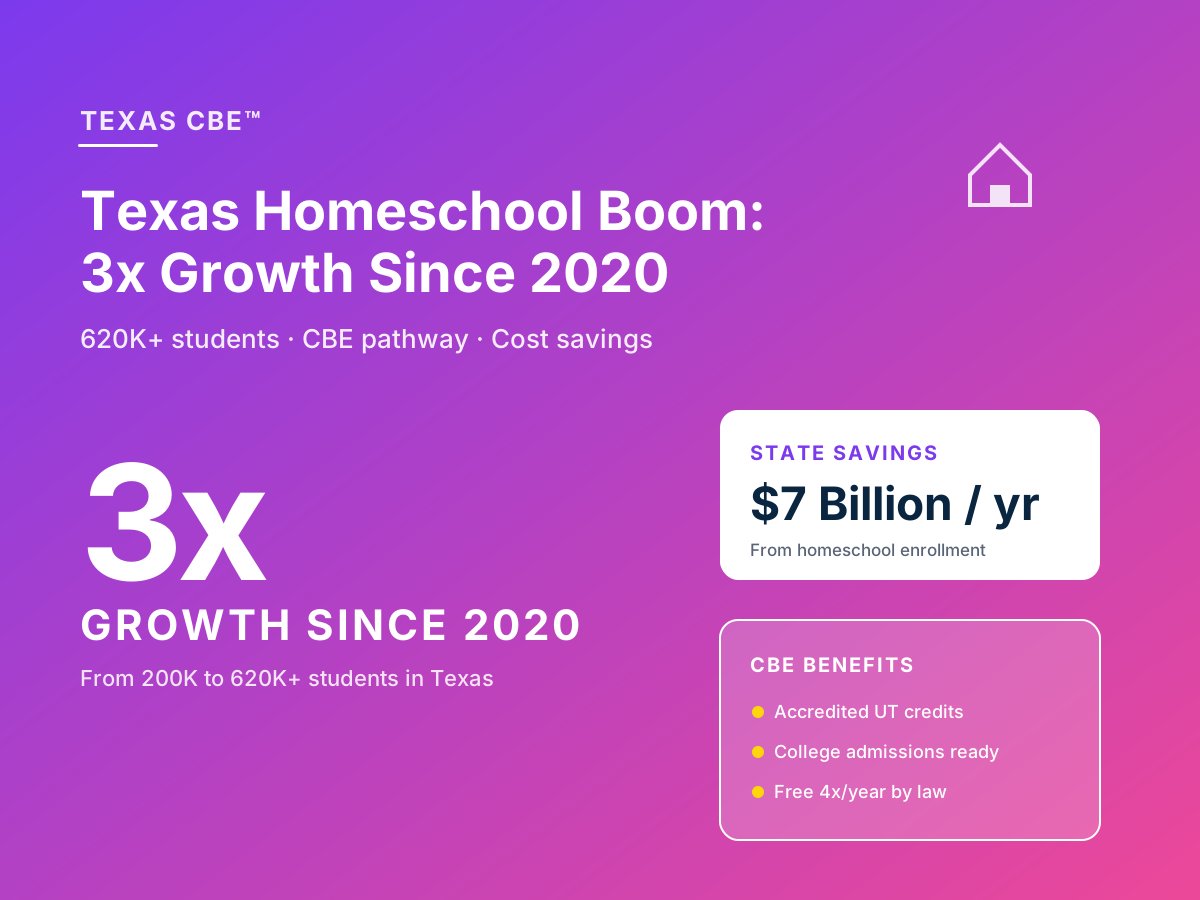
If you're an immigrant family in Texas, you may have noticed something: more and more families — including in your own community — are pulling kids out of public schools and educating them at home. This isn't a fringe trend anymore. Texas homeschool enrollment has tripled since 2020, with over 620,000 students now learning at home. Here's what's happening, why it matters financially, and how Credit by Exam (CBE) makes the transition realistic.
Explore CBE for Homeschoolers — Texas CBE™ →The Numbers Are Staggering
| Metric | Value |
|---|---|
| Growth since 2020 | 3x increase |
| Current Texas homeschool students | 620,000+ |
| Annual savings to Texas | ~$7 billion |
| National homeschool rate jump (2020) | 5.4% → 11.1% |
| Year-over-year Texas growth (2024-25) | 69% |
| Pre-pandemic Texas total | ~200,000 students |
| Texas share of US homeschoolers | 6% nationally |
Each homeschool student represents about $10,000-$12,000 in per-pupil state funding that the public school system doesn't spend. That's why the state saves billions while families educate independently.
Timeline of the Boom
Pre-2020: Steady, Niche Growth
- About 200,000 Texas homeschool students
- Steady 3-4% annual growth
- Mostly religious or specialized education families
Fall 2020: The Pandemic Shift
- National homeschool rate hits 12.3% — nearly triple pre-pandemic
- Families realize they CAN do this when forced to
- Many discover their kids learn faster at home
2022-2023: The Permanent Exit
- Over 50,000 Texas students leave public schools permanently
- Families that returned to public schools post-pandemic often re-exited
- Word-of-mouth in communities accelerates the trend
2024-2026: Mainstream Movement
- Texas is now 6% of all US homeschoolers
- 69% year-over-year growth in 2024-25
- Homeschool co-ops, micro-schools, and hybrid programs explode
Why Families Are Switching
According to the Texas Home School Coalition and national research:
| Reason | Percentage of Families |
|---|---|
| Academic quality concerns | 67% |
| Safety and bullying issues | High driver |
| Schedule and curriculum flexibility | High driver |
| Faith-based education preference | Significant minority |
| Special needs accommodation | Critical for some families |
| Cultural and language preservation | Significant for immigrants |
Why This Matters for Immigrant Families Specifically
- Language preservation — Maintain your native language while teaching in English
- Cultural values — Integrate cultural traditions into education
- Bullying protection — Especially for kids with strong accents or different cultural backgrounds
- Academic acceleration — Many immigrant kids are ahead in math/science from their home country
- Schedule flexibility — Accommodate parents working multiple jobs or non-standard hours
- Lower cost than private school — A fraction of $10,000-$30,000/year tuition
The Financial Math: Homeschool vs Public vs Private
Public School (Free, but Hidden Costs)
- Tuition: $0
- School supplies: $300-$500/year
- Lunch: $400-$800/year
- Activities/fees: $200-$1,000/year
- After-school care: $2,400-$7,200/year
- Annual total: $3,300-$9,500
Private School
- Tuition: $10,000-$30,000/year
- Plus all other costs
- Annual total: $13,000-$40,000+
Homeschool
- Curriculum: $300-$2,000/year
- Co-op fees: $0-$1,500/year
- Field trips/activities: $300-$1,000/year
- One parent's reduced income: Varies
- Out-of-pocket cost: $600-$4,500/year
- Real cost: Time and parental involvement
For families where one parent can manage homeschooling, the cost is dramatically lower than private school AND the child often gets more individualized attention than public school.
The Critical Role of CBE (Credit by Exam)
This is what makes Texas homeschool work: under Texas Education Code §28.023, public school districts must offer Credit by Exam (CBE) testing at least four times per year, free of charge.
What CBE Does for Homeschoolers
- Earn accredited credits through University of Texas (UT)
- Demonstrate mastery for college admissions
- Re-enter public schools with recognized credentials if needed
- Build official transcripts that colleges accept
- Validate self-taught learning with state-recognized exams
How It Works
| Step | Detail |
|---|---|
| 1. Self-study at home | Use your chosen curriculum |
| 2. Register for CBE | Through your local school district |
| 3. Take the exam | Free, multiple times per year |
| 4. Earn credit | If you pass at 80%+ |
| 5. Build transcript | Credits appear on official records |
Subjects Covered
CBE is available for nearly every high school course:
- All core math (Algebra 1, Geometry, Algebra 2, Pre-Calculus)
- All core science (Biology, Chemistry, Physics)
- All core English (English 1-4)
- Social Studies (World History, US History, Government, Economics)
- Foreign Languages (Spanish, French, etc.)
For bilingual immigrant kids: Test out of Spanish 1-3 if it's your native language. That's 3 free credits with minimal effort.
Why Parents Need a Solid CBE Prep System
The biggest mistake homeschool families make is assuming "we covered this material, my child will pass the test." CBE exams are standardized to public school curriculum — they test specific concepts in specific ways.
The best approach: use a CBE prep platform alongside your homeschool curriculum.
Texas CBE™ is the #1 platform built specifically for Texas Credit by Exam preparation:
- TEKS-aligned questions matching Texas standards
- AI tutoring for instant explanations
- Smart review system — missed questions return until mastered
- Unlimited practice exams in real test format
- Progress tracking by topic and category
- Launch price $19.99 per exam (regular $29.99, 6-month access) — far less than tutoring
For a homeschool family planning to test out of multiple subjects through CBE, this is one of the highest-ROI investments you can make.
Try Texas CBE™ — Free Sample Questions Available →Considering Homeschool? A Practical Checklist
Year One Planning
- Notify your current school of withdrawal (Texas requires this)
- Choose a curriculum (online, books, or hybrid)
- Set a daily schedule (most homeschool families do 3-5 focused hours)
- Join a local homeschool co-op for socialization
- Research CBE schedule at your local school district
- Set up a dedicated learning space at home
- Budget for materials, activities, and field trips
Texas Legal Requirements
Texas is one of the most homeschool-friendly states in the US:
- No registration with the state required
- No standardized testing required
- No teacher certification required for parents
- Curriculum must include reading, spelling, grammar, math, and good citizenship
- Must be done in good faith with the goal of education
Free and Low-Cost Resources
- Khan Academy — Free K-12 in all subjects
- Duolingo — Free language learning
- PBS LearningMedia — Free educational videos
- Public library — Free books, audiobooks, sometimes museum passes
- CBE through your district — Free credit-earning exams
When Homeschool Doesn't Work
Homeschool isn't right for every family. Consider keeping kids in public school if:
- Both parents work full-time with no flexibility
- Your home environment is difficult to dedicate to learning
- Your child specifically needs the social structure of school
- You don't have time/patience to commit (this is OK and normal)
- Your child is an athlete pursuing scholarship opportunities through school sports
Hybrid Options: Best of Both Worlds
Many Texas families now use hybrid approaches:
| Model | How It Works |
|---|---|
| Homeschool + part-time public | Take 1-2 classes at school (often electives, sports) |
| Homeschool co-op | Group learning 2-3 days/week, home study other days |
| Online private school | Accredited, structured, but at home |
| Micro-school | Small group of 5-15 students with hired teacher |
These options let you customize your child's education while maintaining flexibility and lower costs.
Re-entering Public School (If You Change Your Mind)
This is a major concern for parents considering homeschool: "What if it doesn't work?"
The good news: Texas public schools must re-admit students. Your child will be placed based on:
- Their CBE-validated credits (this is where CBE saves you)
- Placement testing
- Age and grade level
Without CBE credits, your child may be placed below their actual learning level. With CBE credits, they continue at their proper grade.
This is why CBE is essential even if you plan to homeschool indefinitely — it's your insurance policy for flexibility.
Bottom Line
Texas homeschooling isn't a fringe movement anymore — it's a mainstream choice with 620,000+ students and growing. For immigrant families, it offers cultural preservation, academic flexibility, and significant cost savings compared to private school.
The key to making homeschool work financially and academically is using Credit by Exam (CBE) to earn state-recognized credits. Without CBE, your child's transcript is harder for colleges to evaluate. With CBE, you have the best of both worlds — homeschool flexibility AND official credentials.
Action steps for this week:
- Research your local school district's CBE testing schedule
- Identify which subjects your child could test out of immediately
- Try Texas CBE™ with a free practice question set
- Connect with a local homeschool co-op for community
- Plan your withdrawal timing if you're switching from public school
Your child's education is the most important long-term investment your family makes. Texas's flexible homeschool laws + free CBE testing + dedicated prep platforms make this an unprecedented opportunity for immigrant families to design education that fits their needs.
Get Started with Texas CBE™ Today →